
The final set of parallels focused on social and health programmes, non-monetary valuation and low-carbon mobility. Speakers presented work on climate adaptation and willingness to pay, elderly care and integrated social support, global meta-analyses of the value of statistical life, prioritisation by age and health, and benefit–cost analysis of electric vehicle charging, military emissions and vehicle registration reforms.
Under “Climate, Environment & Energy: Non-Monetary Valuation and Social Policy”, chaired by Danae Arroyos-Calvera (University of Birmingham), Yohei Mitani (Kyoto University) presented a global meta-analysis of the value of statistical life, Henrik Andersson (Swedish National Road and Transport Research Institute) examined the value of time and safety in France and the role of an opt-out alternative, and Danae Arroyos-Calvera analysed public preferences over age and health in priority setting, together offering a nuanced picture of how societies value risk reductions and health outcomes.


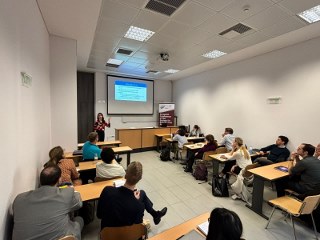

The session “Social & Health Programs: Economic Valuation and Adaptation Potential”, chaired by Andrea Bigano (CMCC), focused on climate adaptation and social care. Andrea Bigano presented cross-country evidence on perceived adaptation potential and willingness to pay for climate adaptation in six European countries, Anna Bartczak (University of Warsaw) discussed preferences for elderly care in Poland and the role of altruism, and Sandya Venugopal (Venugopals Consulting Services) evaluated the costs and benefits of integrating elderly care with domestic violence support, highlighting how economic valuation and behavioural insights can strengthen social and health policy design.


Finally, “Climate, Environment & Energy: Electric Vehicles and Military Emissions”, chaired by Roman Caha (Charles University), examined low-carbon mobility and defence-related emissions. Roman Caha, together with Milan Ščasný (Charles University) and Anna Alberini (University of Maryland), analysed electric vehicle charging at public stations in the Czech Republic, Christina Pourani (National and Kapodistrian University of Athens / RAAEY / Panteion University) addressed the issue of military pollutant emissions, and Marián Sedlák (Charles University), with Milan Ščasný and Anna Alberini, assessed how vehicle registration fee reform in Slovakia affects passenger vehicle registrations. This final block underscored the role of BCA in guiding the transition to cleaner transport while accounting for complex institutional and security contexts.


